May 8, 2018

Marie Osmond Facebook Live Session With Kelly Lang, Kim Goodwin,Donny Osmond, and T.G. Sheppard

Marie Osmond Facebook Live Session Features Appearances by Kelly Lang, Kim Goodwin, Donny Osmond, and T.G. Sheppard

marie osmond and kelly lang

Marie Osmond gave fans a backstage pass to her dressing room on Tuesday at the Flamingo Hotel in Las Vegas where she revealed her makeup tips and tricks of the trade on model, fellow singer-songwriter and close friend, Kelly Lang.

The Facebook Live video of Osmond doing Lang’s makeup has already accumulated more than 95k views, 2.6k likes, 3.3k comments, and 240 shares.

The hour-long video follows Osmond taking Lang’s makeup from a simple, natural look to a night-time glam look, all while giving step-by-step details of the application process and taking fan questions.

“I was so thrilled when Marie asked if she could do my makeup. With her busy schedule, I didn’t think she’d ever have the time, especially one hour before she went on stage!” explains Lang. “She is such a sweet and fun friend to do this with and is so knowledgeable about makeup she could actually quit her day job and go into makeup full time.

Joining in on the fun was world-renowned makeup artist Kim Goodwin, Lang’s country music legend husband T.G. Sheppard, who has over 20 No. 1 hits, as well as Osmond’s superstar brother, Donny Osmond who popped in to give a few pointers.

Comments flooded in saying that Lang transformed into Elizabeth Taylor within the tutorial.

“My favorite part of her Las Vegas show is a number called ‘Showstopper,’ where her makeup artist Kim Goodwin takes her on a year-long journey and turns her into 20 iconic faces,” says Lang. “It’s amazing and truly shows off her creativity not only as an artist but as a makeup expert.”

Key takeaways include:

1. Covering age/dark spots

2. Outlining lips

3. Choosing fake eyelashes

4. Buying a white pencil

5. Feathering your eyebrows

Check out the tutorial here: https://www.facebook.com/marieosmond/videos/10160312490615324/

SHARE THIS POST ON: Facebook
May 8, 2018

Babies and Sleep, the Basics of What to Expect During the First Year

Mom and baby

New babies bring serious joy, but they can also bring serious sleep woes. Knowing what to expect when it comes to baby sleep, as well as a few strategies, can make the difference between ongoing sleep deprivation and sweet dreams for the whole family. From self-soothing to sleep training and how parents can get some rest too, here’s what you need to know.

By: Tema Flanagan

Nobody could have prepared me for the overwhelming love I felt for my son when he first entered the world nearly two years ago—or for the sleep deprivation I would experience during his first year of life.

Of course, we expected it at first. Everyone had warned us that the first couple of months might feel challenging. After all, babies typically don’t sort out the difference between night and day until they are around six weeks old, when their circadian rhythms finally start to develop. During the first few days at home, the whole not-sleeping thing still seemed almost fun—nighttime wakings were simply another opportunity to gaze in wonder at our precious infant. At the time, my husband and I jokingly referred to our sweet little babe as “the tyrant king,” who made us his adoring, round-the-clock subjects.

As a first-time mom committed to breastfeeding (and with an aversion to letting my baby cry, at all, let’s be honest), those first two months bled into many more of multiple, middle-of-the-night nursing sessions. To make matters worse, my little fella refused to nap for more than 30 minutes at a time unless I physically held him, in which case he would snooze away happily for two hours. Before long, I was completely exhausted and utterly desperate for solutions to our sleep woes.

During this phase, I unwittingly became an amateur baby sleep expert, immersing myself in baby sleep books and spending hours trolling the wild and wooly web for tips and information. With a little time, adjusted expectations, and some different strategies, my little one finally started sleeping through the night—and taking pretty solid midday naps, too—but my experience in “baby boot camp,” as a friend rightly calls it, has stuck with me. And now, with a second baby on the way, the subject of baby sleep is once again fresh on my mind.

By this point, I may have succeeded in terrifying the expectant first parents among you. So here’s the good news: not everyone has the same experience when it comes to sleep during the first year of a baby’s life. My sister-in-law, who had twins just a few months before we had our son, found herself with two sleep-through-the-nighters at only three months old, without any intervention on her part (divine intervention may be another story).

Individual babies are unique, as are parenting styles. You will experience some degree of sleep disruption after your baby is born but having an understanding of the science of baby sleep—as well as a few strategic tricks up your sleeve—can help make the difference between ongoing sleep deprivation and sweet dreams.

Why sleep is so important, for all of us

Lack of sleep makes it hard to function well in the short-term, and it can have a serious effect on health in the long-term.

It almost goes without saying that sleep is essential to good health—but the sleep habits of many Americans suggest that it’s probably worth reiterating. While sleep-deprived parents of infants may represent the group fighting most valiantly to get more sleep, studies have found that a third of all American adults, as well as many young kids and teens, regularly don’t catch enough ZZZs.

To get a better understanding of just how important good sleep is to the physical and mental health of people of all ages, we spoke with Dr. Sujay Kansagra, a pediatric neurologist and Director of the Duke Health Pediatric Neurology Sleep Medicine program.

The specific sleep needs of adults and babies differ, but “there are numerous consequences to both short-term and chronic sleep deprivation,” Dr. Kansagra says. As he explains (and as those of us who have experienced it can easily attest), short-term sleep deprivation is associated with multiple issues, including:

  • Decreased attention span
  • Increased irritability
  • Increased fatigue/sleepiness
  • Worsening of underlying depression/anxiety
  • Increase in risk-taking behavior

When short-term sleep deprivation becomes a long-term pattern, it can lead to issues like coronary artery disease, increased risk of obesity, and an impaired immune system. It can also increase the likelihood or severity of mental health issues.

With rapidly developing brains and bodies, babies and children require more sleep than adults—and their need for enough sleep may be even more crucial to good health than it is for adults. “Sleep is one of the essential pillars of wellness for young children,” says Dr. Kansagra. “Sleep is critical for learning, development, and overall growth. An infant and young child’s brain is developing quite rapidly and therefore requires adequate sleep to form new memories and support overall neurodevelopment.” When children are chronically under-rested, the results can be disastrous to their overall health, including behavioral issues similar to ADHD and an increased risk for becoming obese later in life.

The irony is that infants can (and typically do) get all of their sleep needs met while simultaneously totally disrupting that of their parents. That’s because a baby’s sleep needs and natural patterns are simply different than that of adults. The first few months are typically the hardest because even when a baby is getting plenty of sleep, much of that sleep will take place during the day, with nighttime sleep still very much broken up. The end result can often be a well-rested baby and exhausted, sleep-deprived parents.

“For new moms, there are a multitude of challenges during the day,” acknowledges Dr. Kansagra. “A new mother may be juggling the challenges of breastfeeding, other children, an active household, a regular job, and her own personal well-being in addition to many other things. This makes getting adequate sleep a particular challenge. Couple this with an infant that may be waking up multiple times each night and you have a setup for a very sleep-deprived individual.”

Thankfully, this stage can be relatively short-lived, and parents can make age-appropriate efforts to teach their babies the skills needed to sleep independently and consolidate sleep into longer and longer stretches at night.

The basics of baby sleep: what to expect in the first year

As you’ve probably gathered by now, babies have different sleep requirements and patterns than do older children and adults, and those needs and patterns change pretty rapidly during a baby’s first year of life.

Hopefully, by the time your child turns one, he or she will have gone from sleeping pretty much erratically—waking frequently at night and taking multiple naps throughout the day—to sleeping 10–12 hours in a row at night and taking just two naps comprising one to four hours of consolidated daytime sleep. That’s a lot of change in a relatively short period of time!

Here’s what to expect, in very broad strokes, over the course of the first year. Keep in mind that your baby is unique and may not follow this exact trajectory, and that’s OK.

What to expect: the first six weeks

Welcome to life as a new parent! As if you weren’t already turned inside-out emotionally (and hormonally, if you’ve just given birth), you can and should expect all of your usual sleep routines to come to a grinding halt for the next six to eight weeks. You’ve just entered the Wild West, sleep-wise, so buckle up and get ready to catch up on sleep in piecemeal fashion, whenever and wherever you safely can. Good thing your baby is so cute!

Your little one has just made her grand entrance into the world, and she’s still figuring things out—things like the difference between night and day. Indeed, until she’s around six weeks old (and possibly older), your little one will likely sleep—and have periods of wakefulness—around the clock, seemingly at random. “Basically, newborns are napping 24-hours a day. Great, right?” says Alexis Dubief, baby sleep consultant, blogger, and author of Precious Little Sleep: The Complete Baby Sleep Guide for Modern Parents.

In addition to having an undeveloped circadian rhythm, your baby needs to refuel throughout the night in order to receive enough calories and proper nutrition. At first, you will likely be advised by your delivering doctor or midwife to wake your baby every two to three hours over the course of the night to ensure she’s getting enough breast milk or formula. Nighttime feedings are entirely appropriate (and even necessary) for the first several months of a baby’s life, so be especially cautious of any sleep training guides that purport to get your little one sleeping through the night in the first weeks or months of life.

Sleep needs by age

During this time, strategic planning and catnapping superpowers are the best survival strategy. “Ideally, you want to plan for this if you have a partner or somebody who can help night-parent,” Alexis says. “Assume your newborn will be awake for one to two hours between ‘naps,’ even in the middle of the night.” If you do have a partner, plan to divide and conquer. Your baby “may go to bed at 10:00, then be awake and perfectly content from 2:00–4:00 a.m.,” says Alexis. “So maybe somebody goes to bed early and sleeps 9:00 a.m.–2:00 p.m., then parent number two takes the 2:00–7:00 a.m. shift.” Of course, if you are exclusively breastfeeding, it may be a little harder to split up night duties. Pumping is work in and of itself, but it’s worth considering if it allows you to sleep through one or more night feedings.

If you are the sole nighttime caregiver or a single parent, plan to go to bed as early as you can to maximize the chance of sleep over the course of the night. “I encourage all new parents to plan for multiple nighttime awakenings and therefore get to bed much earlier than typical,” Dr. Kansagra says. “You may have to plan for 10 or 11 hours of sleep opportunity in order to get the seven to nine hours an adult would need.” And, of course, if your schedule allows for it, plan to nap when your baby naps whenever possible.

You can help guide your newborn toward more regular sleep patterns by exposing your little one to plenty of sunlight during daylight hours and keeping nighttime interactions quiet and soothing and keeping lights dim or dark.

What to expect: the first three to four months

Your baby’s sleep should have become much more predictable by the time she turns three or four months, with a regular bedtime and a relatively reliable schedule of night feedings and naps. This should happen pretty naturally, assuming you do a few things to help set the stage.

Make your baby’s bedroom a sleep oasis

When it comes to your baby’s sleep environment, think cool, dark, and quiet. Blackout curtains are a great investment, and so is a sound machine (I prefer the Dohm Classic).

Set a regular bedtime and stick to it

Earlier is better: somewhere in the 6:30–8:30 p.m. range, depending on your work schedule and other factors. You may notice that your baby “sets his own bedtime,” as the evening nap consistently turns into your little one’s longest chunk of sleep in a 24-hour period.

Create a short but reliable bedtime routine

This may include elements like a bath, book, song, nursing or a bottle, and rocking. Keep it simple enough that you can repeat the whole shebang each night without complicated props or special conditions that are hard to replicate when traveling, for example.

Create a short but consistent nap-time routine

Before each nap, do an abbreviated version of your bedtime routine—something that takes five to ten minutes but helps give your baby the signal that it’s time to sleep.

Offer naps based on sleepiness cues rather than rigid, by-the-clock schedules

Some baby sleep books recommend rigid scheduling of naps and feedings from a very early age. While this certainly caters to the parents’ desire for a more predictable schedule, it may not be the best thing for your baby.

As infants grow during the first year, they are capable of staying awake for progressively longer periods of time before getting tired and cranky—what baby sleep experts refer to as “the span of awake time.” Babies in the three to four month range tend to do well with awake times of 60–90 minutes between naps. Using the span of awake time as your general guide, start looking for your own baby’s cues that she’s getting sleepy, like yawning, rubbing her eyes, and spacing out. At this point, sticking with this scheme, your baby may take three to four naps a day, depending on the duration of naps over the course of the day.

Don’t worry too much yet about teaching baby to fall asleep independently

Many baby experts now refer to the first three months of an infant’s life as “the fourth trimester.” Harvey Karp, author of The Happiest Baby on the Block, likes to joke that “babies are born too soon.” By this he means that newborn babies aren’t quite ready for the big, bright world they have just entered and, for a short time, at least, prefer conditions that simulate life in the womb. Swaddling, rocking, nursing, pacifiers, baby carriers, swings, and shushing are all excellent ways to provide the sort of stimulus your infant craves in the first three months of life.

Using these techniques to help soothe your little one to sleep still makes sense at this point. Of course, you can always try putting your baby in the crib “drowsy but awake” and see what happens. A little fussing is fine, but it’s best to wait until baby is a little older to force the issue.

Don’t stick to rigid feeding schedules in an effort to improve sleep

Many people assume that improving sleep means sticking to a rigid feeding schedule or weaning feedings,” says Heather Turgeon, psychotherapist, baby sleep consultant, and co-author of The Happy Sleeper: The Science-Backed Guide to Helping Your Baby Get a Good Night’s Sleep-Newborn to School Age. “If you do that early on (before the baby is, say, five months) it can interfere with breastfeeding success.”

What to expect: the first five to eight months

Babies in this age range often start consolidating their daytime sleep and begin dropping naps, going from three or four down to two or three naps per day. Many babies in this range also begin sleeping through the night—at least as defined by sleeping five hours or more in a row (I know, how thrilling!).

At this point, many experts recommend working with your baby to start teaching them self-soothing skills so she can learn to fall asleep independently (more on this later). Remember, though, to consult with your pediatrician before actively weaning your baby off any remaining night feedings. While your pediatrician may give you the OK, it’s best to check with them first to make sure they don’t have any concerns regarding your baby’s weight or other health factors.

As baby’s daytime sleep continues to consolidate, you should see a more predictable time-of-day schedule emerging for naps, though it’s still wise to heed the span-of-awake-time guidelines to avoid an overtired baby (ironically and unfortunately, overtired babies sleep less soundly and for shorter durations).

You may also start noticing that other developmental factors—things like teething and learning new skills—will occasionally interfere with sleep. Roll with the punches as best you can and keep in mind that all of baby’s stages—from the most adorable to the most frustrating—tend to be pretty short-lived.

What to expect: the first nine to twelve months

By the time your baby turns one, she will likely be down to two naps per day (and will typically drop down to just one midday nap by the time she’s 18 months old, if not sooner). Hopefully, your baby is also sleeping through the night in a more meaningful way—as in 10–12 blissful hours in a row. (If not, it’s never too late to start working toward that goal.) By now, you have probably also started to find your groove as a parent, with the confidence to more regularly discern and follow your instincts in caring for your little one. Books, articles, charts, graphs, and message boards—while still helpful—may seem like less of a necessity. You know your baby best, after all.

The scoop on sleep training

The primary goal of sleep training, regardless of the particular approach or technique, is to teach your baby self-soothing skills and help them realize their innate potential to fall asleep (and remain asleep) independently.

During the first few months of a baby’s life, it is entirely appropriate to respond to her every need. This early responsiveness on the part of parents helps forge parent-child bonds and gives babies a foundation of security and love on which to build. So early on, it makes complete sense to rock, nurse, and shush babies to sleep.

The trouble comes when the work of soothing a baby to sleep continues to rest with the parents and doesn’t eventually transfer to the baby. Typically, this transfer will require some degree of “training”—though there are many different approaches available to parents, from those that attempt to avoid crying altogether to those that use controlled periods of crying.

This is where people tend to get worked up: do a quick search of “cry it out” or even just “sleep training” and you’ll see that it’s an issue on which people are rarely neutral. It turns out, however, that the disputes around sleep training techniques are probably overrated. “Although many consider sleep training techniques controversial, when it comes to the science behind it and studies that have been published, there really is no controversy,” Dr. Kansagra says, pointing to the American Academy of Sleep Medicine’s sleep training parameters. “Sleep training is considered safe, effective, and felt to have a variety of benefits.” What this means is that there’s no one right way to instill healthy sleep habits in your baby.

Alexis adds that “cry it out” in and of itself isn’t a very meaningful term. “I don’t like the term ‘cry it out’ and prefer not to use it,” she says. “[Cry it out] doesn’t describe any clear approach to fostering independent sleep—what does it mean exactly? The answer depends entirely upon who you are talking to. It’s also a pejorative term. Babies cry in lots of circumstances. Most cry in the car seat, but we don’t call them ‘crying transportation chairs.’ They cry during diaper changes, but we don’t call changing pads the ‘crying poop removal place.’”

Some crying may be a natural part of teaching babies independent sleep skills, regardless of approach (though some do promise to deliver results with no tears). “When you change what happens at bedtime, there will likely be some degree of complaint and/or tears. Change is hard and tears mark the struggle,” Alexis notes. “Learning to do new things is rarely easy. But of all the great cool thing your kiddo is learning to do (crawl, swallow food, etc.), few of them will be as beneficial to their health and development as sleep.”

Heather, whose Sleep Wave technique (for babies five months and older), involves a system of responding to the baby in a reliable, predictable way, notes that working on sleep needn’t be harsh or unresponsive. “We hear people say that they got the recommendation to ‘shut the door and don’t go in until morning’ all the time. This is never necessary. It’s harsh, it disrupts natural feeding patterns, and we would never recommend it,” Heather says. “We like to think of handing over the role of self-soothing to a capable baby so they can do what their bodies are naturally programmed to do—sleep. This takes putting a thoughtful, consistent new sleep plan into place. It always involves responding to the baby. Parents are usually shocked by how well it works if they follow it consistently.”

The main thing to keep in mind is that your baby’s unique temperament, as well as your own parenting philosophies, can guide you to the right approach for your family. “Although many use the term ‘cry it out,’ sleep training can be done in a way that caters to parental preference,” Dr. Kansagra says. “If you do opt to sleep train your child, remember that there are a large number of scientific studies that support this decision. Conversely, if you opt not to sleep train, that is also fine, but the decision should be with the parents. As parents, it is vital that we support one another.”

However, you go about doing it, remember that the goal is a happier, better-rested family—so the end results should be a win-win all around. Keeping this goal in mind may help you to be more dedicated to the work of teaching your baby independent sleep skills. And it may also help you to remain flexible when things don’t go exactly as planned. Don’t expect perfection but do expect progress. And remember: “Parenting is not an event in the Hardship Olympics,” says Alexis. “Nobody gets a medal for being miserable for years. If something is not working, don’t keep doing it.”

Read the complete article HERE


SHARE THIS POST ON: Facebook
May 7, 2018

The Dynamikos Brand of Eye Wear Has Many Stories To Tell

Dynamikos brand of eye wear has much credibility, knowledge, goodness and love behind and within its stories. To simply call this an eyewear company is not enough.

I feel it is important to watch this video HERE featuring Dynamikos Founder, Dayna Lee Cornelius (pictured below) before going much further. It’s a perfect start of your journey to making your best Dynamikos Sunglass purchase that will “make you feel beautiful, look beautiful and help make the world a better place.”  You’ll learn about the positive ripple effect your individual purchase will start toward benefiting highly accredited non-profits, human and wildlife. Please watch. You will be glad that you did.

Dynamikos Founder Dayna Lee Cornelius

Dynamikos Founder Dayna Lee Cornelius

These are some of the things that I took away from this video that meant the most to me, as a consumer.

The company gives back 20% of it’s profits.

The non-profits it supports are close to my heart, wildlife and kids – poaching prevention and children’s eyesight health.

The sunglasses are handcrafted.

You are paying for sunglasses that last.

The team personally picks out the color of each lens, the type and personally know the reason why these  choices are important.

The Founder is at the forefront of the company.

Check back soon as I will be continuing this post by sharing one of my favorite Dynamikos Designs and why I love it.  I will be directing you to some great tips from the Dynamikos Journal page like how to chose the best sunglasses design that flatters your face.

May is Skin Cancer Awareness Month. I am a skin cancer survivor. I will share some important info about skin cancer. Information about lenses that provide protection to ward off those little wrinkles at the corners of our eyes, shield your eyes from damage and block that eyeball-searing ultraviolet (UV) light.

Follow & Like Dynamikos on:

FaceBook

Instagram

SHARE THIS POST ON: Facebook
May 7, 2018

WallettHub With Some News About Working Moms

Mother and Daughter

Mother’s Day is around the corner, next Sunday! With more than 70 percent of moms with young children working today, the personal-finance website WalletHub today released its report on 2018’s Best & Worst States for Working Moms.

In order to help ease the burden on “Women Who Work,” particularly moms, WalletHub compared the attractiveness of each of the 50 states and the District of Columbia for a working mother based on 15 key metrics. The data set ranges from median women’s salary to female unemployment rate to day-care quality.

Best for Working Moms Worst for Working Moms
1 Vermont 42 Texas
2 Minnesota 43 Wyoming
3 Massachusetts 44 Georgia
4 District of Columbia 45 West Virginia
5 Connecticut 46 Mississippi
6 Rhode Island 47 South Carolina
7 Maine 48 Nevada
8 New Jersey 49 Alabama
9 Delaware 50 Louisiana
10 New York 51 Idaho

Best vs. Worst


  • New York has the highest day-care quality score, 116, which is five times higher than in Idaho, the lowest at 23.
  • Mississippi has the lowest child-care costs as a share of the median women’s salary, 9.60 percent, which is 2.7 times lower than in the District of Columbia, the highest at 26.06 percent.
  • South Dakota has the highest ratio of female executives to male executives, 79.39 percent, which is 3.1 times higher than in Utah, the lowest at 25.81 percent.
  • Maryland has the lowest share of single-mom families with children younger than 18 in poverty, 26.30 percent, which is 1.9 times lower than in Mississippi, the highest at 50.80 percent.
  • Minnesota has the highest median annual women’s salary (adjusted for cost of living), $44,281, which is 2.2 times higher than in Hawaii, the lowest at $19,828.

To view the full report and your state or the District’s rank, go ahead and visit:
https://wallethub.com/edu/best-states-for-working-moms/3565/

SHARE THIS POST ON: Facebook
May 6, 2018

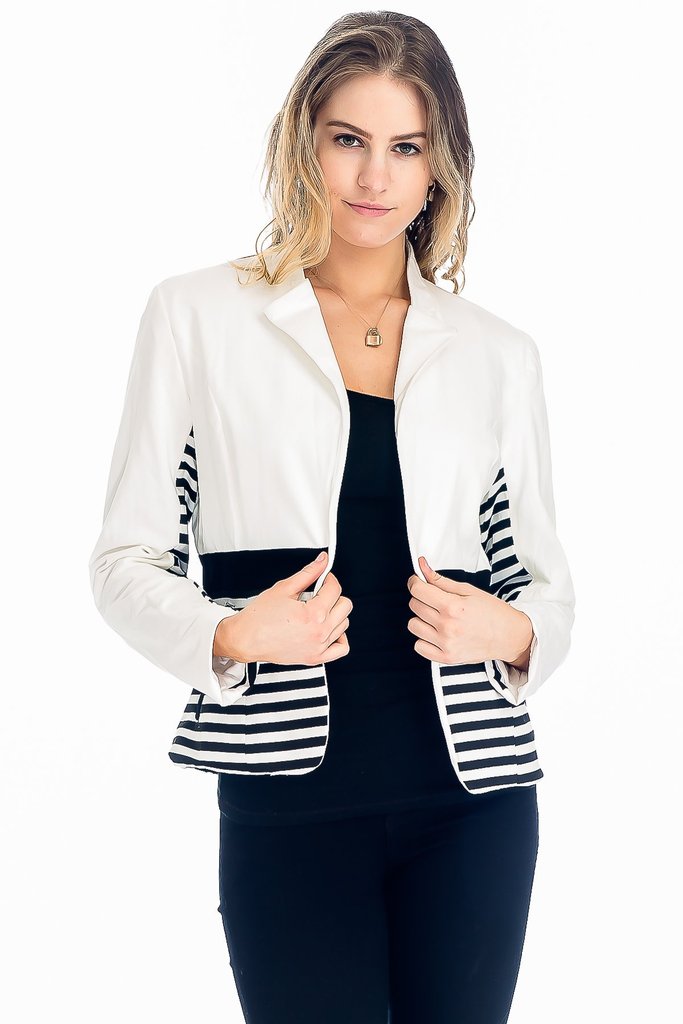
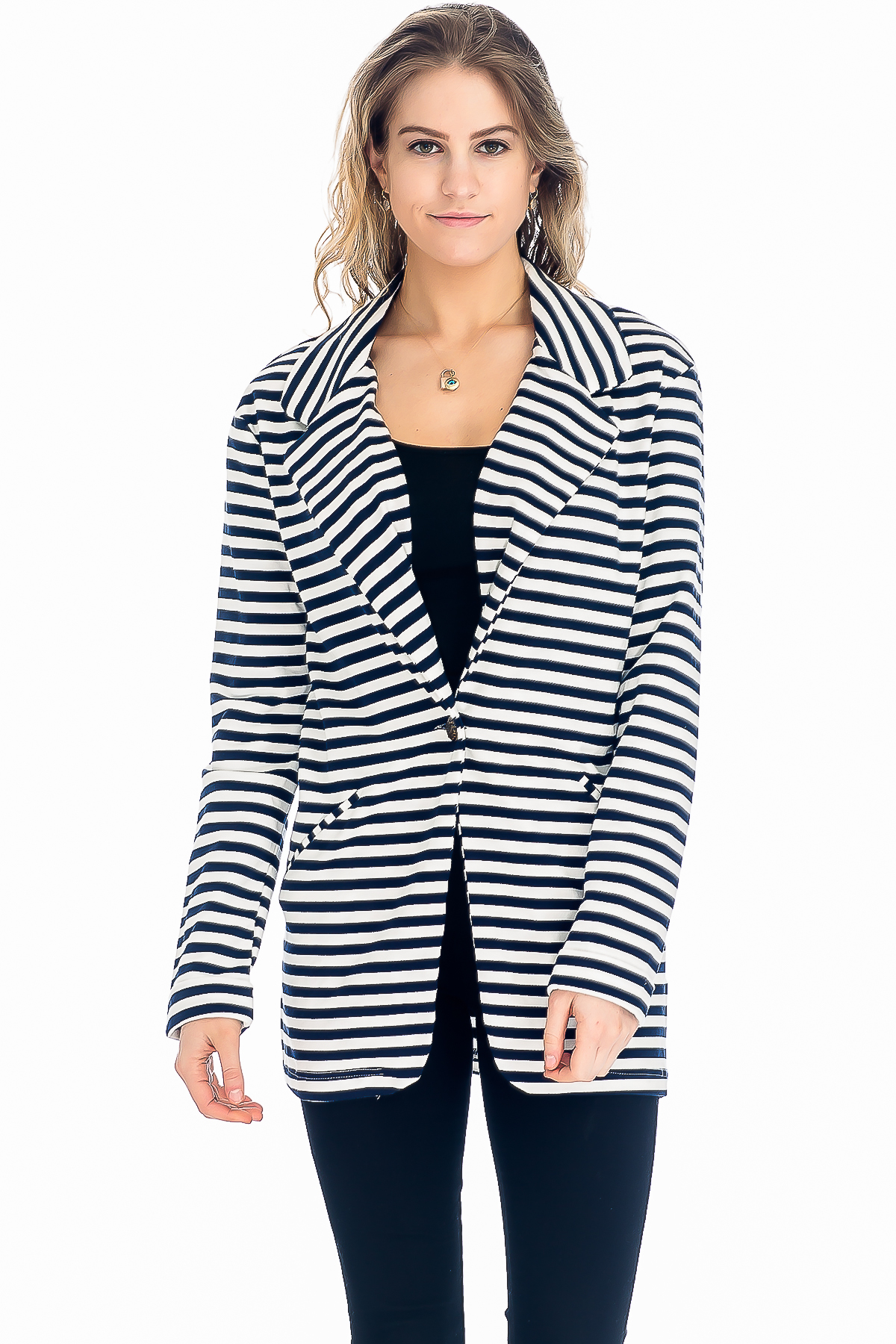
Style It With Stripes From House of Baciano

LA Fashion House Baciano

Style it with stripes!  Stripes  are eye catching and always in fashion. Some even say “there is no summer without stripes”.  This season, LA Fashion House Baciano is giving stripes  a whole new personality.

LA Fashion House Baciano

Whether you are looking for a hip blazer for a pulled together work ensemble or a long sweater for a chic casual look, LA Fashion House Baciano has got you taken care of.

LA Fashion House Baciano

For two generations Baciano has been outfitting LA’s most fashionable women and constantly searching for new colors, fabrics, shapes, and trends to make sure that they bring the fashion game home every season. This broad collection offers a mix of comfort and style that can be worn from day to night.

LA Fashion House Baciano

The Baciano design team is at the forefront of the fashion world, constantly searching for new colors, fabrics, silhouette, and trends. After sketching by hand, the designers use CAD technology to bring their unique designs to life with the highest quality fabrics and manufacturing with state of the art machinery.


SHARE THIS POST ON: Facebook
May 5, 2018

Hair Loss Causes and Solutions For Men and Women

Woman surprised at hair loss

Hair loss is something which bothers men and women a lot. Irrespective of the type of loss, male-pattern hair loss, female-pattern hair loss or thinning of hair, the “root” causes of these problems remain to be the same.

This article will give you well-researched and detailed information on the various causes of hair loss and the best and effective solutions.

Hair

SHARE THIS POST ON: Facebook
May 4, 2018

Amazon, 4 Of My Favorite Amazon Finds

Fiber Wig Extra Long Pure Black

Fiber Wig Extra Long Pure Black


Amazon Shopping for the World’s Biggest Selection of Products

I shop at Amazon for things I otherwise can not find easily and for the lower pricing. Take for instance, Drawstring Travel Shoe Bags. They come in assorted colors, sizes, materials and styles.  I recently bought a package of 10 travel shoe bags. I use one in my Zumba tote for my Zumba sneakers & socks another for my Zumba Toning Sticks. They are different patterns so I know what is inside when reaching in my bag quickly.  In my gym bag, I use one for my gym shoes and socks. I have one in my car that holds my flip flops for when I suddenly decide to stop in for a pedicure or for sore feet.  I use one to hold a packable travel wrap in my car. I can easily pop it into any of my totes for comfort wear in restaurants, by the fire or at the beach at night. These are bags that are “must have’s” for weekend or long term travel as they prevent your shoes from soiling your clothes and from getting scuffed.

Lip Gloss Applicators are a must-have for the makeup professional. I use them for my clear or light shades of lip gloss/lip plumper. I hardly ever wear the clear or light shades alone.  I usually layer the clear or light shades over a richer or brighter colored lip stick.  Using the applicator included with the gloss causes it to get colored by the various lipsticks you are using it over. Soon it no longer stays clear or the nice clean color that you purchased.  Plus if your lips aren’t clean, such as after eating in a restaurant, or at the beach, Yuck!  Don’t use the original applicator. That even goes for colored glosses.  There are various kinds of applicators. Some of the applicators are reusable, others are disposable.

From Amazon, I order Alcohol Wipes. I get the Clear Touch brand 100 for $5.99 or . I use them to clean my nails off after polish removal.  I use them for bugs bites or to get ink or makeup swatches off of my skin. They remove hairspray that is stuck on mirrors. You can use them to clean off phones and surfaces.  They are very versatile and I always have some on hand.

My absolute favorite Mascara is available on Amazon. Dejavu Fiber Wig Pure Black Mascara with extra long wand. I try to recall where I found this fabulous mascara in the first place.  I think it must have been at a beauty trade show.  I love it because it is a film type, fiber mascara so it washes off easily with water.  I very gently rub my lashes with lukewarm water and it comes off. I have been using it for years and years. I have never had a problem with it running during wear or damaging my lashes.

Special Beauty/Fashion note from Lisa:

For all the fashionistas out there who want to stay on top of their fashion game, make sure you visit myfashionbeautyblog.com. The blog has plenty of good reads on fashion, beauty, and other wellness tips.


SHARE THIS POST ON: Facebook
May 3, 2018

Beth Sobol Joins Internet Domain Company MMX As Global Brand Ambassador

Beth Sobel

Beth Sobel


Beth Sobol will bring awareness to the tech company’s new .FASHION domain extension and educate fashion insiders on new branding opportunities.

Minds + Machines Limited (London Stock Exchange: MMX) today announced that it has signed fashion expert and entrepreneur Beth Sobol, as the company’s Global Brand Ambassador. In this newly established role, Sobol will share her expert insights to help start-up fashion brands grow their business, expand MMX’s consumer following, and inspire industry partners.

“We are very excited that Beth has joined MMX as our Global Brand Ambassador. Her proven track record in the fashion industry as the founder of Miami Fashion Week and the upcoming Future of Xperience fashion and retail technology conference make her a powerful spokeswoman for .FASHION domains.” Solomon Amoako, Vice President of Channel Strategy at MMX explains. “Beth’s extensive network in the fashion and technology sectors make her the perfect voice to carry our message of new branding opportunities to the fashion elite”.

Launched in 2015, .FASHION is already in use by Louis Vuitton, Calvin Klein and Nike. .FASHION will change the way consumers search for clothing, accessories, bloggers and any fashion related business. “Creative domain extensions give startups and small businesses better, shorter options for naming their brands,” said Sobol. “In the future, these new extensions will be ubiquitous.”

“As big brands adopt their own names and vertically oriented suffixes become pervasive, typing in these extensions will become second nature for consumers,” added Sobol. “I am excited to be part of this forward-thinking company that merges tech and marketing for fashion brands.”

Minds + Machines Limited launched .FASHION domains in 2015 and the domain has been secured and in use by major brands (louisvuitton.fashion, calvinklein.fashion, nike.fashion), fashion blogs & publishers (theindustry.fashion, techstyler.fashion, nyu.fashion), aspiring designers (mila.fashion, damur.fashion, dam.fashion) and fashion entrepreneurs (cala.fashion, assemblelab.fashion, lucylondon.fashion).

To learn more about obtaining a .FASHION domain, please visit bethsobol.fashion.

About MMX
Minds + Machines Group Limited (LSE:MMX) is the owner and operator of a world class portfolio of top-level domain assets (gTLDs). As a sales and marketing-led registry business, we are focused on commercializing our portfolio in partnership with our expanding global network of distribution partners. The MMX portfolio is currently focused around geographic domains (e.g. .london, .boston, .miami, .bayern), professional occupations (e.g. .law, .abogado, and .dds), consumer interests (e.g. .fashion, .wedding, .vip), lifestyle (e.g. .fit, .surf, .yoga), outdoor activities (e.g..fishing, .garden, .horse) and generic names such as .work and .casa. As a business, we work through our expanding international network of registrars and distribution partners to bring the benefits of affinity-based domain addresses to B2B and consumer audiences. For more information on MMX, please visit www.mmx.co.

About Beth Sobol
Beth Sobol is a South Florida based fashion expert and consultant with a focus on launching the careers of International emerging designers into the American market. Sobol worked as an internationally recognized model for over 20 years and parlayed that experience into launching her successful production company. She is the founder and producer of the original Miami Fashion Week, one of the top fashion weeks in the world, hosting thousands of guests from around the globe. Beth’s awards and honors include Florida’s Top 100 Power Players by Florida International Magazine, Award of Excellence in Fashion Development by the Russian American Trade Promotion Council, 50 Most Powerful People in Miami by Reel Life Magazine, Top 25 Influencers in Florida by General Motors Corporation, Entrepreneur of the Year award from the Greater Miami Chamber of Commerce, Gold Medal Award from Miami Today, Movers and Shakers Award from South Florida Business Leaders Magazine, Influential Business Women Award from South Florida Business Journal to name a few.


SHARE THIS POST ON: Facebook
May 2, 2018

Denim Designer sts blue’s Cropped Skinny Styles, New Summer Fashion Staples

Ellie High Rise Step Hem Skinny (Floresta Wash)

Ellie High Rise Step Hem Skinny (Floresta Wash)


Denim designer sts blue has debuted this season’s cropped skinny editions of fan-favorite styles in various washes.

sts blue offers couture-inspired denim without the high price tag.  You can satisfy your obsession with bold new pieces, like the ultra-mod mid-rise “Emma” in a dark deconstructed wash and the high-rise exposed button or “Ellie” in an understated medium wash. Pair those with a flirty floral blouse or a delicate pastel cami, appropriate for the occasion.

Style your favorite logo tee with a crop skinny jean for a fun look. Wear with an oversized sweatshirt and sneakers, or with a cropped tank and wedge heels.  Available at  Nordstrom, or online at stsblue.com, where you’ll find  free shipping and returns. Join the sts blue rewards program to earn points toward all of your purchases, and follow the fashion trends on Instagram @sts_blue .

About sts blue:

The sts blue muse is trendy, sexy and fun. She looks to celeb street style for her fashion influence. She considers her social life when selecting what jeans to wear, whether it’s brunch with friends or date night, denim is always where her outfit begins. She chooses styles that are anything but basic, rather she convets the latest “it” jean, jean short, or denim jacket. Not afraid to rock denim on denim but she wants value, a perfect fit, and a jean that will make heads turn. Find sts blue denim at Nordstrom, Macy’s, Dillard’s, and Von Maur, or online at stsblue.com, all with a wallet-friendly price tag. Follow the latest trends and our #DenimDolls on Instagram @sts_blue.


SHARE THIS POST ON: Facebook
May 1, 2018

Shilpi Agarwal, M.D. & Belli Beauty Tips For Choosing The Right Ingredients

Shilpi Agarwal, M.D

Shilpi Agarwal, M.D

Shilpi Agarwal, M.D. is a medical advisor to Belli Beauty, a line of skin care products specifically formulated to exclude ingredients that studies show to have even remote connections to birth defects, miscarriage, etc. The board-certified family medicine practitioner is also a self-described beauty junkie and ingredients nerd.

According to Dr. Agarwal, you don’t have to give up premium, luxurious skin care products. It’s just a matter of choosing the right ingredients and excluding others.  Here are a few of her tips:

  • Be picky for a purpose. Look for products with no phthalates, paraben preservatives, artificial dyes and fragrances.
  • Avoid retinoids. Oral retinoids have been associated with birth defects, and while there’s no hard proof that topical ones are harmful, most doctors agree it is best to err on the side of caution.
  • Re-think your acne products. Common acne fighting ingredients like benzoyl peroxide and salicylic acid are no-no’s during pregnancy and lactation. The irony, of course, is that pregnancy causes many women (even those who have never had acne) to break out. Belli Anti-Blemish Facial Wash uses lactic acid, an ingredient that occurs naturally in the body.
  • Don’t forget the sunscreen, but avoid chemical-based versions. Look for one that offers mineral-based broad spectrum UVB and UVA protection, like Belli’s Pure Radiance Facial Sunscreen. It also hydrates the skin, so it helps you downsize your beauty regimen.
  • A mani/pedi is a great way to pamper yourself during pregnancy, but insist on polishes that are “triple-free,” or that contain no DBP, toluene, or formaldehyde.
  • When in doubt, consult your ob/gyn as to which skin care and cosmetic ingredients are safe for you and baby during this important time.


SHARE THIS POST ON: Facebook